
How community marketing built this cult brand…
Most brands like the idea of building a brand community, but few know how to build one that feels real, and one that runs itself.
What made PureSport different – and why hundreds of people turned up to run around Battersea Park in matching socks – is that the brand understood something most marketers miss:
“The people are the community, not the brand. You just provide the place.”
We had the pleasure of chatting to James Dollah, Head of Brand at Puresport, who gave us his hardwon lessons on growing a brand in a crowded category by leveraging community and using budget smartly.

1. Relationship marketing still beats paid reach
Before PureSport, James worked at Nocco, helping turn the energy drink into a fixture of UK CrossFit culture.
But he didn’t have budget.
“I had very little budget in the way of being able to work and pay with big athletes.”
Instead of transactional influencer deals, he built actual friendships:
“If I just befriend all of these people that I wanted to work with by going and training with them, hanging out with them, going for Nando’s with them, they genuinely become my friends.”
That changed everything. Because creators and athletes massively over-delivered when they felt emotionally invested.
“Even though their deliverables on their contract would say four stories a month and two posts, they would do way more. They felt like they were part of something bigger than themselves.”
The key insight here is that the best creator marketing feels like belonging, like shared investment, like collaboration. While most marketers often obsess over scaling influencer outreach, the best operators still do unscalable things exceptionally well. Think: less DMing, more building real relationships.
2. The smartest positioning is often cultural, not product-led
Nocco didn’t try to become “an energy drink for everyone.”
They aggressively attached themselves to one rising cultural movement. For them, that happened to be CrossFit.
They showed up everywhere the culture existed:
Events
Competitions
Athlete groups
Gyms
Social feeds
And eventually the association became automatic. The moment James realised they’d won?
“Two kids had gone to a fancy dress party as CrossFitters, and part of their outfit was a can of Nocco.”
That’s an unbelievable brand signal, which wasn’t just about awareness, but about identity integration. The product became shorthand for belonging to the culture.
As James put it:
“Find something where your brand can have a right to play, but then really lean into it.”
3. Communities grow faster when you remove intimidation

PureSport Run Club exploded because it understood the psychological truth most fitness brands ignore – which is that most people are scared to join.
So instead of building for elite runners, they engineered emotional safety. One small example was refusing to call slower runners “the slow group.”
Instead:
“Sexy pace.”
It sounds silly, but language shapes identity, and changing the positioning from “come prove yourself” to “come belong” dramatically expanded the addressable audience. Optimising for insiders is great, but optimising for newcomers is what will help scale your business.
4. Vibes scale better than operations
One of the best lines in the entire talk:
“It was 90% vibes and 10% organization.”
Most marketers would do the opposite.
They’d:
over-plan
over-brand
over-produce
over-script
PureSport discovered that perfect logistics don’t create emotional energy. People do. James described attending highly-produced fitness events with DJs and expensive production that completely flopped:
“They’d spent tens of thousands… but there was no atmosphere and there was no vibe there.”
Meanwhile PureSport’s loosely organised runs kept exploding because people genuinely connected. That’s a huge lesson.
Consumers remember:
how something felt
who they met
whether they felt welcomed
What they don’t remember is your event run-sheet.
5. Word-of-mouth becomes exponential when you give people content
PureSport understood modern distribution better than most brands. Every run club doubled as a content engine, and crucially, they made it ridiculously easy for attendees to post.
Professional photographers would upload images the SAME NIGHT. Their photographer Paddy Cartwright once edited and uploaded 1,300 photos that night. The speed mattered because once the emotional peak goes, the motivation to post also goes.
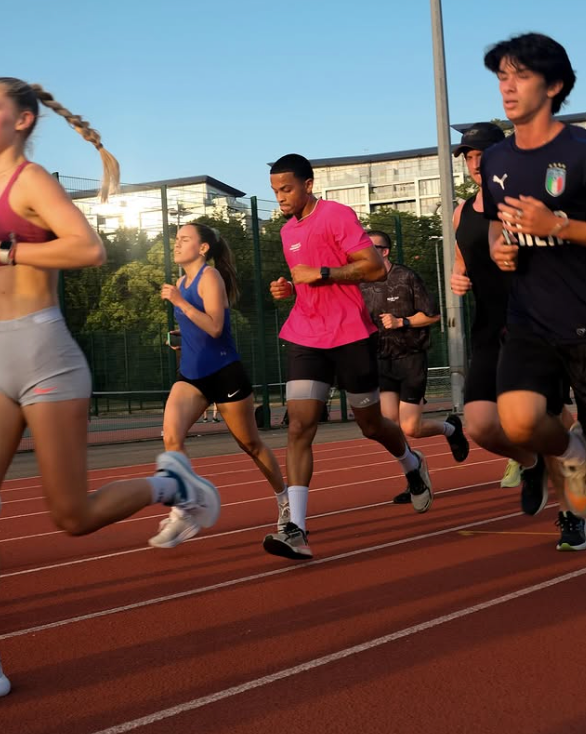
But the content wasn’t primarily for PureSport. It was for the attendees. People had high-quality images that they could put on their social media, which in turn transformed community members into distribution. And because the posts came from friends – not the brand – they carried far more trust.
James explained it brilliantly:
“If a brand has a billboard saying ‘World’s best chocolate bar,’ maybe you believe it. But if your friend says, ‘This is the best chocolate bar I’ve ever had,’ you’re probably gonna buy that.”
6. The best communities exist beyond the product
One of the telltale signs is if you remove the product, does the community still stand?
Most “brand communities” fail this test because they’re actually just customer groups, event programs, and at worst, a loyalty scheme.
PureSport succeeded because the underlying value exchange wasn’t product-based. It was:
friendship
belonging
movement
identity
emotional support
The CBD products were almost secondary.
Ask yourself:
“If our product disappeared tomorrow, would these people still want to gather?”
If the answer is no you probably don’t have a community yet.
7. The hard truth about building a meaningful community

PureSport struggled to measure direct ROI from community efforts.That’s pretty normal. Community creates, halo effects, brand memory, word-of-mouth, emotional preference, future purchase intent – not immediate attribution – and that’s pretty hard to measure.
James admitted they eventually tried systems to measure behavioural patterns:
attendance tracking
Shopify integrations
loyalty systems
purchase journeys
But the most important thing he said was this:
“If you’re going into it with the mindset of ‘what is the return on this?’ it will be short-lived.”
It’s a hard truth that will frustrate performance marketers, but the brands that build meaningful communities usually start from belief rather than spreadsheets.
Step outside the spotlight
PureSport succeeded because it understood human psychology at a deep level.
Things like:
making newcomers feel safe
avoiding exclusionary language
creating rituals
enabling friendships
encouraging participation
giving community members ownership
If you can build an environment where people feel seen, welcomed, connected, and emotionally invested – and acknowledge that your brand isn’t the main character – that’s when your brand starts becoming a culture.


